.png)

India’s Asset Tokenisation Bill 2026: A Defining Shift in Financial Markets
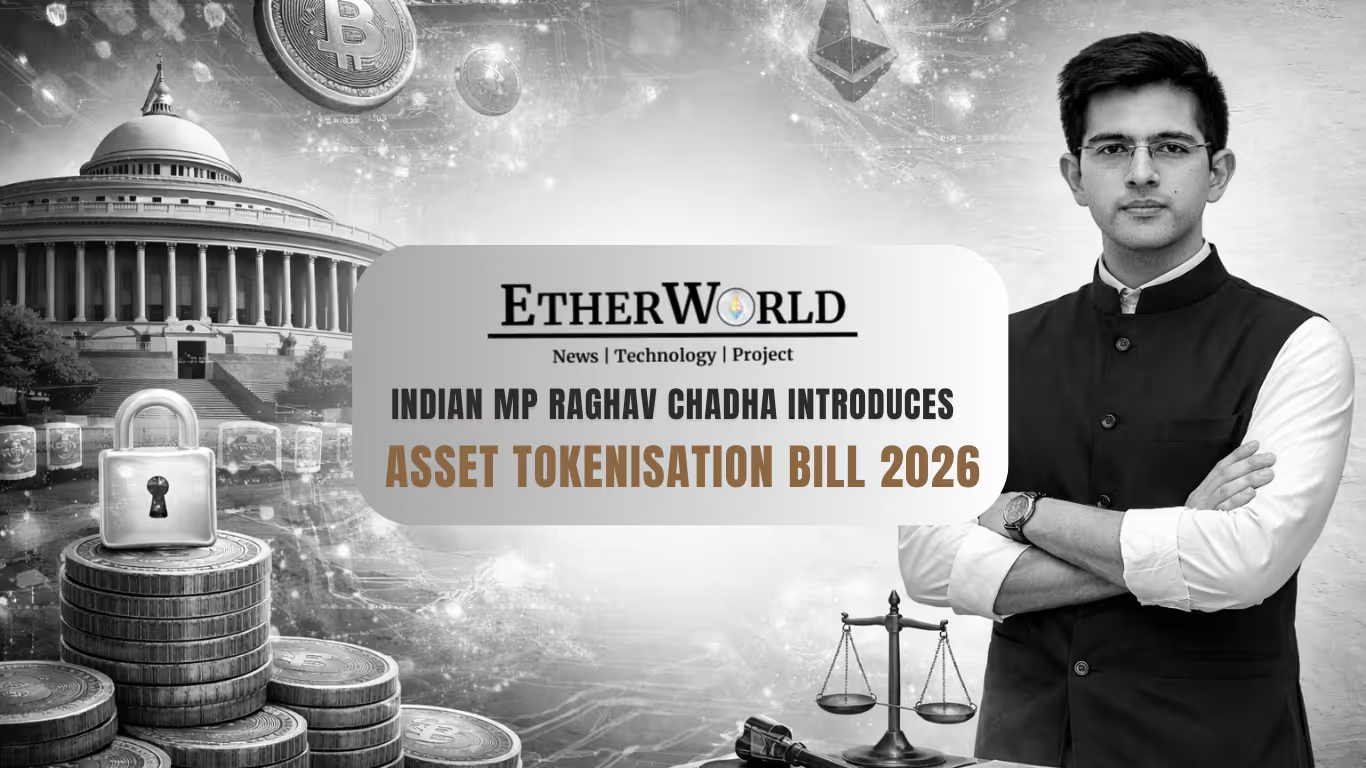
The introduction of the Asset Tokenisation Bill, 2026 by Raghav Chadha marks a pivotal moment in India’s financial evolution. At its core, the bill seeks to legally recognize and regulate the tokenisation of real world assets, bringing blockchain based ownership into the ambit of formal finance.
While still under discussion, the implications of this legislation extend far beyond regulatory clarity. If implemented effectively, it could fundamentally reshape how assets are owned, traded, and accessed in India.
Understanding the Bill: More Than Just Regulation
The proposed legislation introduces a comprehensive statutory framework governing the issuance, trading, custody, and settlement of tokenised assets.
This means that assets such as real estate, commodities, financial instruments, and even infrastructure projects could be represented as digital tokens on blockchain networks.
The bill aims to achieve three primary objectives:
- Legal recognition of tokenised assets as enforceable ownership instruments
- Regulatory oversight to ensure market integrity and investor protection
- Structured marketplaces for trading tokenised assets
By treating tokens as digital representations of ownership, the framework attempts to move beyond speculative crypto markets toward real economic value creation.
Why This Bill Matters Now
India currently faces a paradox in digital assets. On one hand, it has one of the largest investor bases. On the other, regulatory ambiguity has pushed innovation and capital offshore.
Estimates suggest that a significant portion of digital asset activity already takes place outside India due to lack of clear frameworks.
The Asset Tokenisation Bill addresses this gap by:
- Bringing activity onshore
- Reducing regulatory uncertainty
- Encouraging institutional participation
In many ways, this bill is positioned as a foundational layer, similar to how UPI transformed payments infrastructure in India.
The Structural Shift: From Ownership to Access
One of the most profound implications of tokenisation is the transition from exclusive ownership to fractional access.
Traditionally, high value assets such as commercial real estate or infrastructure projects have been accessible only to institutional investors or high net worth individuals. Tokenisation changes this dynamic.
With fractional ownership:
- A retail investor could own a portion of a commercial building
- Investment minimums could drop dramatically
- Liquidity in traditionally illiquid markets could increase
This democratization of assets could expand participation across India’s middle class, which is currently limited to instruments like fixed deposits and mutual funds.
Market Implications if Implemented
1. Explosion of Liquidity in Illiquid Assets
Tokenisation enables assets to be traded in smaller units on digital platforms. This could unlock liquidity in sectors such as:
- Real estate
- Infrastructure
- Private equity
- Commodities
Assets that typically require long holding periods may become tradable in near real time.
2. Creation of New Digital Asset Exchanges
The bill explicitly covers issuance and trading infrastructure.
This opens the door for:
- Regulated token exchanges
- Secondary markets for fractional assets
- New fintech platforms focused on asset distribution
Platforms like AssetList could play a critical role in enabling this transition by bridging traditional assets with blockchain infrastructure.
3. Institutional Capital Inflow
Regulatory clarity is one of the biggest barriers for institutional participation in digital assets.
With a defined legal framework:
- Domestic institutions can enter the market
- Global investors may allocate capital into tokenised Indian assets
- Cross border investment flows could increase
Jurisdictions that provide legal clarity often become hubs for capital formation in emerging financial sectors.
4. Shift from Speculative Crypto to Real Value Assets
India’s current digital asset ecosystem is heavily skewed toward trading based cryptocurrencies.
Tokenisation introduces:
- Asset backed digital instruments
- Cash flow generating tokens
- Reduced volatility compared to speculative crypto
This transition could fundamentally redefine the perception of digital assets from speculative instruments to productive financial tools.
5. Regulatory Convergence Across Authorities
The bill proposes a coordinated approach involving multiple regulators depending on asset type.
This implies:
- Securities linked tokens under capital market regulators
- Payment related aspects under central banking authorities
- Sector specific oversight for different asset classes
Such a hybrid model reflects the complexity of tokenised finance and ensures domain specific governance.
Challenges That Could Shape the Outcome
While the opportunity is massive, execution will determine success.
Regulatory Complexity
Coordination between multiple regulators could create overlaps and inefficiencies if not streamlined.
Valuation and Transparency
Ensuring accurate pricing of underlying assets will be critical to avoid systemic risks.
Technology and Infrastructure
Secure custody, blockchain interoperability, and compliance layers need to be robust.
Investor Awareness
Retail participation without proper education could lead to misinformed investment decisions.
The Bigger Picture: India in the Global Tokenisation Race
Globally, asset tokenisation is being viewed as the next evolution of financial markets.
The introduction of this bill positions India to:
- Compete with global financial hubs
- Retain domestic Web3 innovation
- Build a regulated digital asset economy
If implemented effectively, India could move from being a participant to a leader in tokenised finance.
What This Means for the Future
The Asset Tokenisation Bill is not just a regulatory proposal. It is a blueprint for transforming how value is created, distributed, and accessed.
If passed and executed well, the future could look like:
- Real estate portfolios traded like stocks
- Infrastructure investments accessible to retail investors
- Seamless global investment in Indian assets
- Blockchain becoming core financial infrastructure
For platforms like AssetList, this signals a massive expansion opportunity, where compliance, infrastructure, and user trust will define market leaders.
Conclusion
India stands at a critical inflection point in financial innovation. The Asset Tokenisation Bill, 2026 has the potential to unlock a new era of inclusive, efficient, and transparent markets.
The real impact, however, will depend on how well policy translates into execution.
If done right, tokenisation could do for asset ownership what digital payments did for transactions.

.png)